
Kribsoo Diallo
Neutrality and Solidarity:
The Official and Popular Egyptian Position on the Italian Aggression against Ethiopia, 1935–1936
With the rise of fascism in Italy and Benito Mussolini becoming Prime Minister in 1922, the ruling circles developed an increasing expansionist tendency aimed at acquiring new colonies comparable to those of other European colonial powers in Africa. The Italian colonies in Libya, Eritrea, and Somalia were insufficient to satisfy fascist ambitions, making Ethiopia a primary target of Italy's colonial project. Rome saw its control over Ethiopia as a gateway to reviving the dream of an empire spanning the Red Sea and the Mediterranean, guaranteeing a strong international standing. The Italian invasion of Ethiopia marked a turning point in regional history, as its impact was not limited to reshaping the balance of power in the Horn of Africa but extended to the entire Red Sea region, directly affecting Egypt due to geopolitical ties and vital interests, primarily the Nile waters. This article addresses the official Egyptian stance on the Italian occupation, the subsequent economic sanctions imposed on Italy, and the popular Egyptian response to the invasion, including forms of solidarity and protest.
The materials I found about Egyptian popular solidarity with the Ethiopian people during the fascist invasion were mostly drawn from local newspapers, workers’ organizations’ leaflets, and small civic group documents. These fragmented traces show how popular memory survives outside formal state archives. They highlight how solidarity was articulated not through official channels but through everyday acts of political and moral imagination. More broadly, these archives remind us that resistance and transnational empathy often leave their mark in ephemeral and unofficial forms, archives of feeling and action rather than state documentation.
The materials I found about Egyptian popular solidarity with the Ethiopian people during the fascist invasion were mostly drawn from local newspapers, workers’ organizations’ leaflets, and small civic group documents. These fragmented traces show how popular memory survives outside formal state archives. They highlight how solidarity was articulated not through official channels but through everyday acts of political and moral imagination. More broadly, these archives remind us that resistance and transnational empathy often leave their mark in ephemeral and unofficial forms, archives of feeling and action rather than state documentation.
The Official Egyptian Position on the Italian Invasion of Ethiopia and Economic Sanctions against Italy
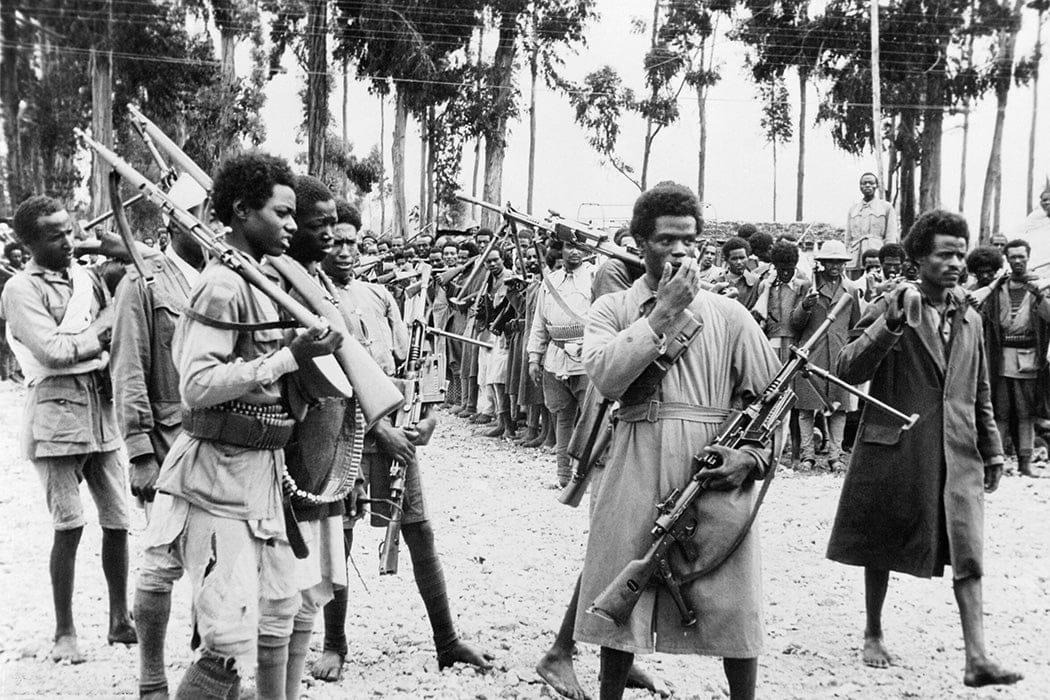
The Italian attack on Ethiopia began on October 3, 1935, following direct orders from Mussolini, who emphasized the need to initiate military operations without a formal declaration of war, to benefit from the element of surprise and avoid intervention by major powers in favor of the Ethiopian Empire. The Italian army consisted of two main corps: northern and southern. Despite the fervent Ethiopian resistance, which lacked modern organization and weaponry, Italian forces managed to assert control over the country within less than a year, employing repressive methods, including the extensive use of poison gas and chemical weapons.1
Positions across Africa varied regarding the Italian invasion of Ethiopia, ranging from silence imposed by colonial authorities in most countries to popular voices and nationalist movements advocating solidarity with Addis Ababa. Amid this situation, the official Egyptian position, characterized by neutrality, aligned with British policy, which controlled Egypt’s affairs at the time. This position was clearly expressed in the statement of Egyptian Prime Minister Tawfiq Nasim on August 3, 1935,2 when journalists asked about Cairo’s stance on the Italian invasion. He replied that the government had not taken a specific decision, emphasizing that Egypt would generally follow British policy.3
These statements provoked widespread dissatisfaction in the Egyptian press, which viewed them as a missed opportunity to gain concessions from Britain in exchange for Egypt’s political and moral support during the crisis. Newspapers harshly criticized Nasim, portraying his government as merely an administration subordinate to the British High Commissioner. Some articles went so far as to describe Egypt as having become a “British colony.” Al-Akhbar newspaper stated that the Prime Minister’s stance contradicted the spirit of the constitution and was therefore, in its view, null and void.4
Part of the Egyptian press approached the Italian aggression from a national interest perspective, calling for leveraging events to secure political gains from Britain, while the Egyptian government sought to accommodate British interests and win London’s favor. This placed the government in a delicate position between domestic public opinion and foreign diplomatic calculations.
Nevertheless, the Egyptian government attempted to show indirect support for Ethiopia by banning Egyptian workers from traveling to Ethiopian territories to work with Italian companies involved in road construction, military barracks, and infrastructure projects linked to military preparations. Egyptian press extensively covered the Italo-Ethiopian war, publishing foreign telegrams, sending correspondents to Addis Ababa (e.g., Al-Balagh), placing war news on front pages, and battle images on back pages, which significantly influenced public opinion. Mahmoud Lotfi Gomaa’s book Between the African Lion and the Italian Tiger represented a prominent Egyptian voice countering fascist propaganda, portraying Emperor Haile Selassie as “the lion embodying the hopes of the East” and linking Ethiopian resistance to the Eastern dream of freedom and dignity. Gomaa emphasized that Europe’s concern with Ethiopia stemmed from fear for the international order or desire to halt Italian aggression, while for the East, Ethiopia represented a higher image of beauty, value, dignity, and honor.
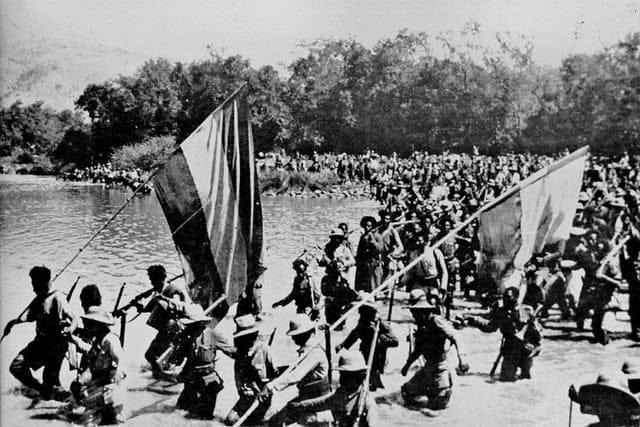
The Italian fascist invasion of Ethiopia became the subject of widespread Egyptian attention, from the general public to intellectuals and politicians. Popular committees quickly formed to support Ethiopia, including the Preparatory Committee for the Defense of Abyssinia, chaired by Nobleman Ismail Dawood, with Prince Omar Tousson and other prominent Egyptians as members.13 The committee aimed to organize an Egyptian volunteer army to fight alongside Ethiopians, recording volunteers’ names and technical support contributions.
Ismail Dawood proposed forming an Egyptian division led by Egyptian officers. Officer Mahmoud Moharram wrote an open letter in Rose Al-Youssef, urging Egyptian soldiers to fight in Ethiopia, stating that volunteering in the Ethiopian army was a victory for freedom against colonial greed and a duty to defend a country linked to Egypt by historical, religious, and geographical ties.14
In September 1935, the General Committee for the Defense of Abyssinia was established at the Coptic Patriarchate in Cairo, attracting many prominent politicians.15 The committee encouraged Egyptians to offer aid according to their capacity. Prince Omar Tousson emphasized religious and historical ties, warning that losing Ethiopia’s independence endangered Egypt’s aspirations and the economic security of the Blue Nile, a vital lifeline.
Beyond politics, social and religious dimensions played a role. The close relationship between the Egyptian Coptic Church and the Ethiopian Church motivated Ismail Dawood to travel to Ethiopia to assess combat conditions and needs. The committee continued fundraising and established the General Committee for Medical Assistance to Ethiopia, chaired by Dr. Abdel Hamid Said, to provide medicines and medical aid. Several Egyptian medical missions reached Harar in Ethiopia and set it as their base.16 The Egyptian government facilitated their work, waiving railway transport fees, reflecting implicit support for Ethiopia and opposition to the Italian occupation.
Italian forces targeted these efforts, bombing Egyptian medical missions in Bole, Djabour, and Jijiga in January 1936. The Supreme Committee for Medical Assistance issued a statement to the Egyptian public, asserting that these attacks would not deter Egyptians, recalling Egypt’s humanitarian aid to Messina after an earthquake. Despite the bombings, medical missions resumed work in Ethiopia, depositing 10,000 Egyptian pounds in the Bank of Ethiopia to renovate the Djabour mission center. Italian air raids on January 18–19, 1936, were largely precautionary, causing no Egyptian casualties, showing Italy’s attempt to discourage Egyptian involvement without provoking war, while Egypt maintained sanctions on Italy.
Meanwhile, Prime Minister Nasim emphasized that Egypt’s policy was adherence to the League of Nations’ decisions, not subordination to Britain.17 He cited Article 16 of the League’s Covenant and the Briand-Kellogg Pact, asserting Egypt’s right to implement international sanctions. Nasim urged Cabinet members to approve his memorandum, indicating that Egypt’s obligations toward Italy would remain suspended during sanctions.
The Cabinet responded to this by issuing Decree-Law No. 145 of 1935, which imposed economic sanctions against Italy.
The Egyptian Popular Position on the Italian Invasion of Ethiopia
Egyptian public opinion, across all social strata and sects, sided firmly with Ethiopia, expressing broad sympathy. This stance stemmed from several considerations summarized as follows:
- Historical and Geographical Ties: Ethiopia is a neighboring African country with long-standing relations with Egypt dating back to ancient times. It is also the source of the Nile, the lifeblood of Egypt.
- Religious Dimension: Religion played a significant role in Egyptian solidarity and sympathy. Egyptians, both Muslims and Copts, felt close to Ethiopians due to shared Islamic and Christian ties. Popular memory recalled that Ethiopia was the first to receive early Muslim migrants fleeing persecution by Quraysh, earning it the designation “Land of the Just Negus” in Islamic tradition. Simultaneously, the Ethiopian Church had historically been under the Coptic Church of Egypt for centuries, with its Patriarch selected from among Egyptian Coptic monks. This spiritual and historical connection fostered pride and emotional unity among Egyptians of all faiths, giving their support for Ethiopia a moral and civilizational dimension beyond mere politics.
- Water Considerations: Egyptians associated Italy’s occupation of Ethiopia with a potential loss of guarantees previously obtained from Ethiopian governments regarding Nile waters. Italian control over Lake Tana, the Nile’s main source, represented a direct threat to Egypt’s water resources and the possibility of restriction or denial.
- The Harsh Libyan Experience: Italy’s occupation of Libya had already stirred strong feelings among Egyptians, given the brutality faced by the Libyan people. With Italy controlling Egypt’s western border, the invasion of Ethiopia positioned Egypt between two Italian pressures from east and west.
For all these reasons, the Egyptian populace expressed deep sympathy for the Ethiopian people from the conflict’s onset, closely following war news. Egyptian newspapers played a key role in raising public awareness, covering events daily with detailed reporting.
Support extended beyond media coverage to direct assistance. Islamic and Coptic religious associations actively collected donations. The Muslim Youth Association played a notable role, gathering funds for Ethiopia and arranging travel for Ethiopian students studying at Al-Azhar to return home and participate in the war.19 Coptic activity included meetings at the Patriarchate, reflecting strong links between the Egyptian and Ethiopian churches. Patriarch Anba Younis held significant religious influence in Ethiopia. The “Charity Market of the Union of Coptic Associations for the Relief of Abyssinia” was established under the patronage of Prince Omar Tousson, and the “Coptic Thamara al-Tawfiq Association” organized a charity market to aid Ethiopian war victims.
Student participation was also notable. The student committee at Fuad I University (now Cairo University) collected donations and organized a famous campaign called the “Abyssinian Penny,” issuing stamps distributed in schools, universities, and higher institutes under the supervision of the student executive committee.20
Calls emerged among national and popular circles to prevent Italian ships from passing through the Suez Canal, seen as a form of civil resistance against aggression. The anarchist movement, active in Egypt since the early twentieth century, also participated, with Italian and Greek anarchists residing in Alexandria and Cairo supporting the campaign.21
Despite this broad popular mobilization, the government’s position remained cautious. It did not issue an official protest even regarding the bombing of Egyptian medical missions in Ethiopia. This hesitancy reflected political calculations linked to Britain, as the government sought a treaty guaranteeing Egypt’s independence and did not want its clear opposition to Italy interpreted as excessive alignment with British interests.
Conclusion
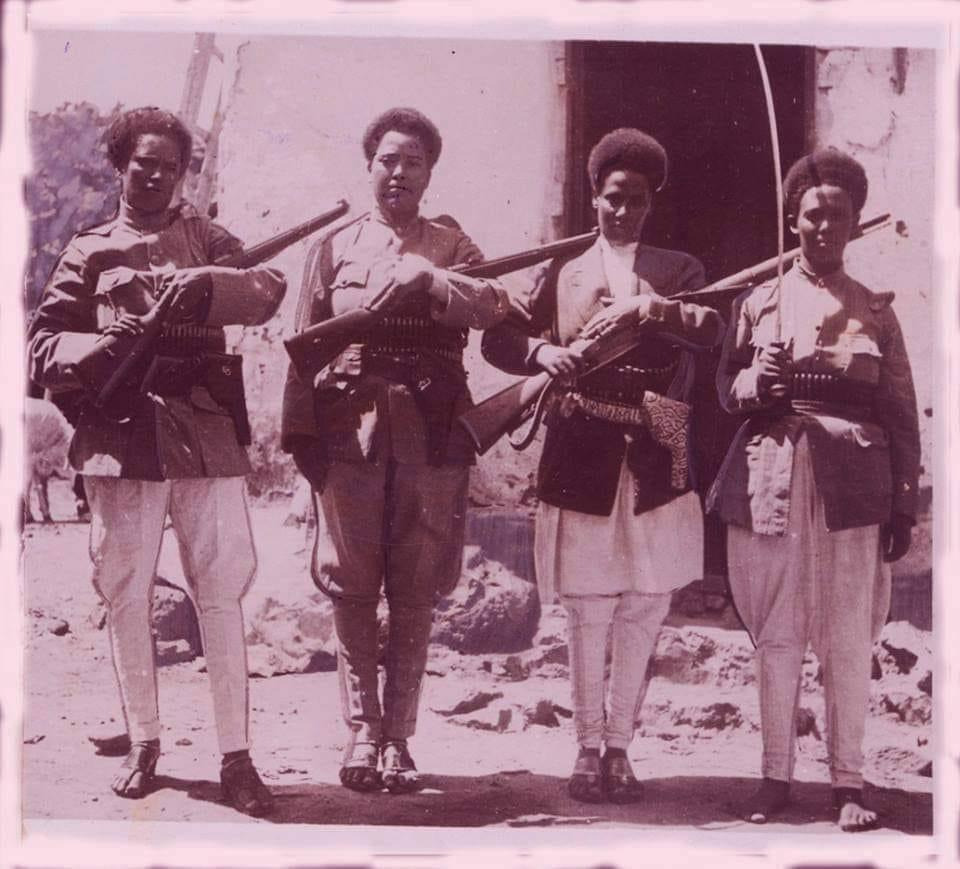
Although the official Egyptian stance initially aligned with Britain, popular pressure proved decisive in shifting this position. Egyptians recognized the direct dangers of Italian occupation of Ethiopia, particularly the threat to the Nile’s source and Egypt’s lifeline. They mobilized to provide material and humanitarian support, leading extensive media and political campaigns against the invasion. This deep popular pressure compelled the government to endorse economic sanctions against Italy, despite Rome’s attempts to disclaim responsibility and portray the decision as a result of British influence. Egyptian public opinion emerged as the driving force behind the official position, illustrating the shared destiny of Egypt and Ethiopia in confronting European aggression and confirming that the will of the people was the most significant factor shaping national policy toward African affairs.
Footnotes
- J. de Matveeffel, History of the War: Italy and Abyssinia, Arabic translation by Fakhri Omar Fawzi, Military Journal, no. 50 (April 1936), pp. 497–498. See also Atef El-Sayed, The Red Sea and the Contemporary World (Cairo, 1985).
-
Yunan Labib Rizk, History of Egyptian Cabinets 1878–1953 (Cairo: Al-Ahram Press, 1975), p. 219. (Regarding Tawfiq Nasim, Egyptian politician and statesman, born 1871, died 1938, Prime Minister 1920–1921, 1922–1923, 1934–1936).
-
FO 407/218, Lampson to Samuel Hoare, No. 132, 3 December 1935, Enclosure 2 in No. 123 (Note au Conseil des Ministres).
-
Talaat Ismail Ramadan, British Emergency Measures in Egypt Regarding the Italo-Ethiopian Conflict, 1935: A Documentary Study (Cairo, 1987), p. 32; also p. 102 (op. cit.).
-
.A.R. Gibb, “The Situation in Egypt,” International Affairs (Royal Institute of International Affairs 1931–1939), vol. 15, no. 3 (May–June 1936), p. 351.
-
Anthony Sourial Abd El-Sayed, op. cit., pp. 246–247.
-
Basheer Hamoud Alwan Hussein Al-Darraji, op. cit., p. 86; Abdel-Malek Awad, “Egyptian Public Opinion and the Italo-Ethiopian War,” Al-Siyassa Al-Dawliya (International Politics), vol. 6, no. 19 (January 1970), p. 54.
-
Zainab Nayef Ahmed Al-Alousi, The Italian Occupation of Ethiopia and the Arab Position, MA thesis (unpublished), Institute of Arab History, Baghdad, 1999, p. 77; quoted in Abdel-Malek Awad, op. cit., p. 45.
-
Al-Ahram, no. 18264 (15 October 1935).
-
Al-Musawwar magazine, no. 587 (10 November 1936), p. 12.
-
Al-Ahram, no. 18308 (29 November 1935).
-
12. Jaafar Abbas Hamidi, op. cit., doc. 68, January 1936.
-
FO 407/218, “Passage of Italian Aircraft over Egypt and the Sudan: Memorandum by Mr. Beckett and Leigh Smith,” No. 62, 22 August 1935.
-
FO 407/218, Egyptian Prime Minister to Sir Miles Lampson, No. 115, 30 October 1935.
-
FO 407/218, Sub-Enclosure in No. 116, Note of the meeting at the Ministry of Justice, 7 November 1935, regarding the application of League of Nations sanctions by the Government of Egypt.
-
Huda Mohammed Abduh Othman, Colonial Rivalry between Britain and Italy in the Arab World and East Africa, 1935–1945 (Riyadh, 2007), p. 134.
-
Haggai Erlich, The Nile – Chapter: "Egypt, Ethiopia, and ‘The Abyssinian Crisis,’ 1935–1936."
-
Egyptian press and periodicals archives (Al-Ahram, Al-Mu’arrikh al-Misri, Al-Musawwar, Al-Majalla al-‘Arabiyya, etc.), 1930s articles and reports.
- Abdel-Malek Awad, “Egyptian Public Opinion and the Italo-Ethiopian War,” Al-Siyassa Al-Dawliya (International Politics), vol. 6, no. 19 (January 1970), p. 54.
Kribsoo Diallo
Kribsoo Diallo is a Cairo-based Pan-Africanist researcher in political science related to African affairs. He has written for many African magazines and newspapers, and Diallo has contributed to translated editions of papers and articles in Arabic and English for several research centers within the African continent.
︎ ︎
Kribsoo Diallo is a Cairo-based Pan-Africanist researcher in political science related to African affairs. He has written for many African magazines and newspapers, and Diallo has contributed to translated editions of papers and articles in Arabic and English for several research centers within the African continent.
︎ ︎

Archive Stories is funded by the London School of Economics and Political Science.
Copyright © 2026 Archive Stories. All Rights Reserved