Zeyad el Nabolsy
Patrice Lumumba
in Gaza:
The Readers of Nahdat Afriqiya
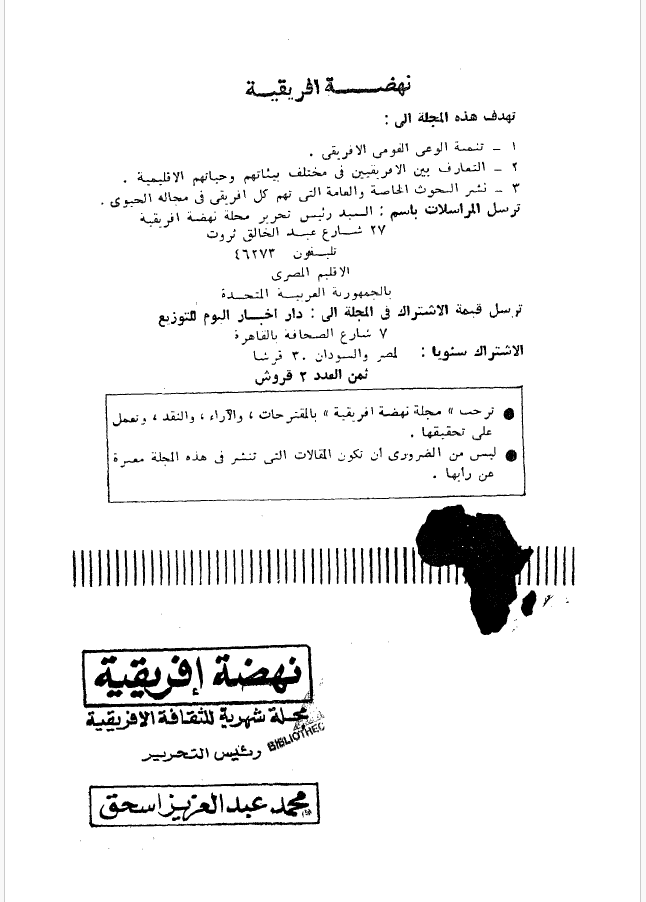
The title of this article is perhaps deceiving. Patrice Lumumba never physically visited Gaza in his life. Yet Patrice Lumumba was in Gaza in the sense that he was the subject of attention among Gazans both before and after his murder in 1961. We know that this was the case because of an important and hitherto neglected archival source, namely the record of letters to the editor that were sent to and published in Nahdat Afriqiya (Renaissance of Africa). Nahdat Afriqiya was the organ of African Association. The African Association initially functioned in the mid-1950s as a hub where Egyptian scholars, journalists, and activists who were interested in African affairs could meet and as a hub for African students who were studying in Cairo. The African Association became an important node for African liberation movements when Cairo acquired its status as a capital of independence movements in the aftermath of the nationalization of the Suez Canal in 1956 and Nasser’s political triumph in the aftermath of the war of the Tripartite Aggression. Liberation movements such as the Frente de Libertação de Moçambique (FRELIMO) sent members to receive military training in Egypt in the early 1960s.
By the 1960s, the African Association, located in Zamalek, became a key organization for coordination between the Egyptian government and the twenty-four nationalist parties which established presence in Cairo. For example, Félix Moumié of the Union of the Peoples of Cameroon (UPC) created an office in Cairo in 1957, and so did John Kalekezi of the Uganda National Congress (UNC). The African Association, under the leadership of Mohammed ʿAbdel-ʿAziz Isḥak, also paid special attention to developing cultural ties between readers in the Arabic speaking world and non-Arabic speaking Africans. This was done through the publication of Nahdat Afriqiya (Renaissance of Africa) which contained articles in English, French, and Arabic on African history, philosophy, music, economics, social history, and political affairs. Nahdat Afriqiya was first published in 1957 and it appears to have circulated widely in the Arabic speaking world. What is especially important about Nahdat Afriqiya is that it allows us to understand the confluence between Pan-Arabism and Pan-Africanism in the 1960s.
Through reading Nahdat Afriqiya we can come to understand how Arabic-speaking readers came to grasp the significance of African struggles for national independence to their own struggles against colonialism. It is true that today most Arabic speakers who live on the African continent, who also happen to form the majority of Arabic speakers in absolute terms, do not think of themselves as Africans. However, it would be a mistake to think that Nasserist anti-colonial discourse was entirely impotent in forging a sense of solidarity between those who primarily identified as Africans and those who primarily identified as Arabs. In fact, an examination of some of the readers’ letters which were published in Nahdat Afriqiya shows that this discourse of solidarity did have some effect at the popular level.
By the 1960s, the African Association, located in Zamalek, became a key organization for coordination between the Egyptian government and the twenty-four nationalist parties which established presence in Cairo. For example, Félix Moumié of the Union of the Peoples of Cameroon (UPC) created an office in Cairo in 1957, and so did John Kalekezi of the Uganda National Congress (UNC). The African Association, under the leadership of Mohammed ʿAbdel-ʿAziz Isḥak, also paid special attention to developing cultural ties between readers in the Arabic speaking world and non-Arabic speaking Africans. This was done through the publication of Nahdat Afriqiya (Renaissance of Africa) which contained articles in English, French, and Arabic on African history, philosophy, music, economics, social history, and political affairs. Nahdat Afriqiya was first published in 1957 and it appears to have circulated widely in the Arabic speaking world. What is especially important about Nahdat Afriqiya is that it allows us to understand the confluence between Pan-Arabism and Pan-Africanism in the 1960s.
Through reading Nahdat Afriqiya we can come to understand how Arabic-speaking readers came to grasp the significance of African struggles for national independence to their own struggles against colonialism. It is true that today most Arabic speakers who live on the African continent, who also happen to form the majority of Arabic speakers in absolute terms, do not think of themselves as Africans. However, it would be a mistake to think that Nasserist anti-colonial discourse was entirely impotent in forging a sense of solidarity between those who primarily identified as Africans and those who primarily identified as Arabs. In fact, an examination of some of the readers’ letters which were published in Nahdat Afriqiya shows that this discourse of solidarity did have some effect at the popular level.
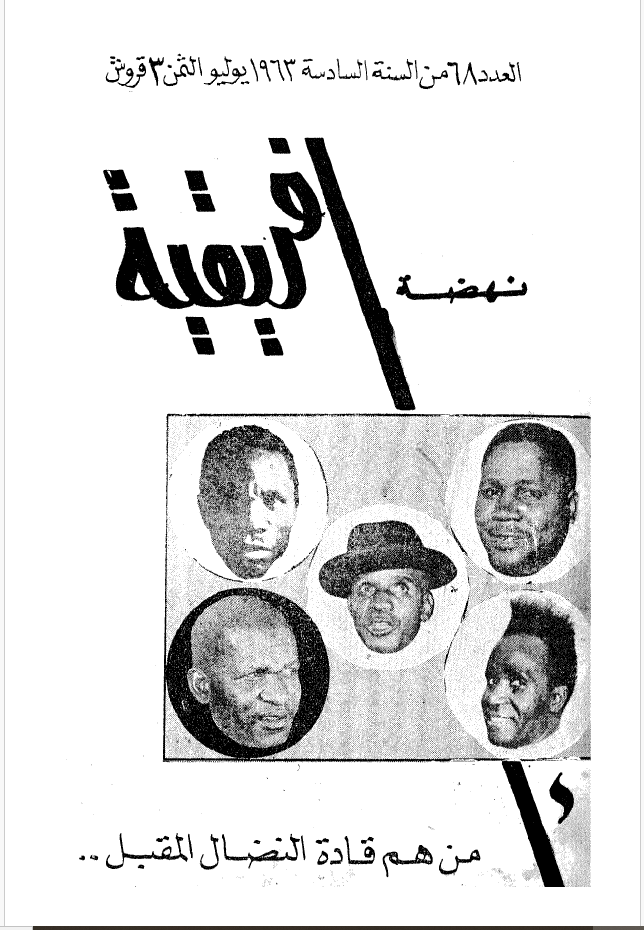
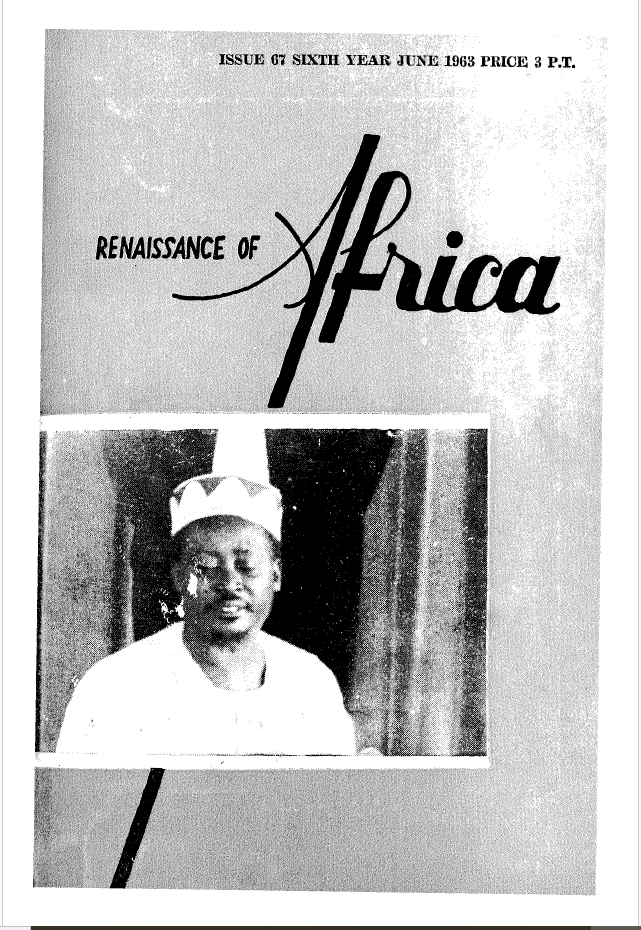
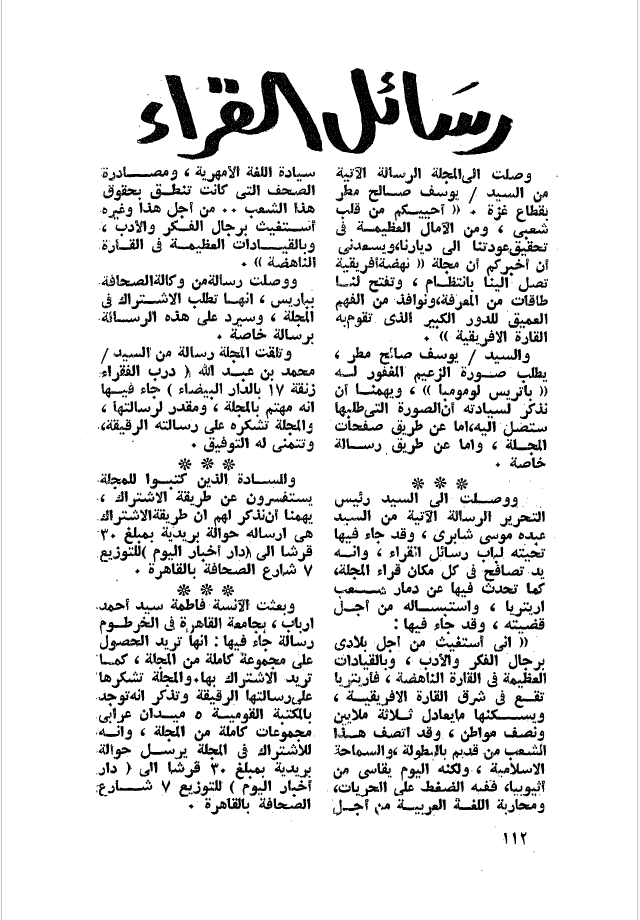
The assassination of Patrice Lumumba in 1961 was widely deemed to be the product of neo-colonialist machinations by Belgium and the United States, with the assistance of the United Nations. Eisenhower had in fact ordered that Lumumba be removed in August 1960. In September of 1960, Joseph-Désiré Mobutu with the aid of the CIA, orchestrated a coup d’etat which led to the imprisonment and eventual killing of Lumumba. The killing of Lumumba sparked outrage in Cairo and led to protestors attacking Western embassies. Lumumba became a martyr figure across many parts of the colonized and formerly colonized world. The significance of the Congo crisis was brought to the attention of the Arab reader through periodicals such as Nahdat Afriqiya. In the 68th issue of Nahdat Afriqya, published in July 1963, the periodical included the following letter from a reader in Gaza, a certain Youssef Saleh Matar: “I send my salutes to you on behalf of my people, who express their undying desire to return to their homes. I am glad to relay to you that Nahdat Afriqiya arrives in Gaza regularly, and it opens up new vistas of knowledge for us. Allowing us to comprehend the great role which is played by the African continent”. The editors add that “Mr. Youssef Saleh Matar requests that a picture of the deceased leader, Patrice Lumumba be sent to him. We wish to assure him that a picture of Lumumba will be sent to him either through the pages of the periodical or by a private package”. By 1963, the Gaza Strip, then under Egyptian administration, was home to thousands of Palestinian refugees who had been driven from their homes in the aftermath of the Nakba in 1948.
We can see how Lumumba had become a symbol for the crimes of colonialism against the colonized peoples of the world. Indeed, it is interesting to note that in the recent Israeli attack on the Iran, residential buildings in a street named after Lumumba in Tehran were targeted. Matar understood that the African struggle for independence insofar as it weakens imperialist powers will have positive consequences for the Palestinians. He understood that the ongoing colonization of Palestine and the dispossession of Palestinians depends on the power of imperialist countries insofar as Israel cannot do what it does without their sustained support. The rational basis for solidarity between Palestinians and Africans is not the existence of a common culture or an ethnic kinship, but rather the objective fact that there is a link of material support between Israel on the one hand and neo-colonial attempts at domination on the African continent on the other hand. Israel had attempted to court the newly independent African states in order to break the Arab diplomatic embargo on it, and it succeeded in establishing a foothold in Ghana in the 1950s. Using Ghana as a base, Israel had attempted to court Lumumba before the independence of the Congo. However, after the independence of the Congo Israel quickly adopted a pro-Western position and anti-Egyptian and anti-Soviet position during the Congo crisis, which required it to adopt a position that was hostile to Lumumba. Israel would go on to play a key role in supporting Mobutu’s pro-Western military rule. As Mehdi Ben Baraka noted in 1965, Israel presented itself as a small socialist state that could provide technical assistance to newly independent African countries. However, by the 1970s, almost all African countries had severed ties with Israel.
While there was (and is) a purely pragmatic basis for solidarity between Arabs and non-Arabic speaking Africans, the entrenchment of solidarity required a more intimate acquaintance at the cultural level and an attempt to combat some of the prejudices against Black Africans which had circulated in the Arabic speaking world from the medieval period onwards. Nahdat Afriqiya provided a platform for dispelling such prejudices. Nahdat Afriqiya introduced Arabic readers to developments in African poetry in the work of Léopold Sédar Senghor, African novels and cinema through the work of Ousmane Sembène, and African philosophy through the work of Alexis Kagame. The periodical received letters from readers in Casablanca indicating that it was circulating in Morocco. It was also read by government officials in Iraq, as indicated by some of the letters from the readers.
We can see stages in the development of the periodical and its readership. In its initial period, 1957 – 1963, the focus appears to have been on the relaying of information regarding prevailing political and economic conditions on the continent. From 1963 onwards there seems to have been a shift toward a more cultural and intellectual focus. The periodical received letters from readers which were published in the 68th issue of the magazine (July 1963) and which requested more cultural content: “the periodical has received letters from readers that praise the writings that are published in its pages. The letters ask for the publication of more research on arts and literature. The letters state that politically speaking the African continent is now known to the Arab reader, and that what the Arab reader now needs is a serious acquaintance with the existential heritage of the African human being in the fields of the novel, poetry, and theatre”. The editors responded by indicating that “they are planning to provide more information on African culture”. Nahdat Afriqiya represented a serious effort to deepen ties between non-Arabic speaking Africans and Arabic speakers. The letters from the readers allow us to understand how ordinary people made sense of Afro-Asian solidarity.
We can see how Lumumba had become a symbol for the crimes of colonialism against the colonized peoples of the world. Indeed, it is interesting to note that in the recent Israeli attack on the Iran, residential buildings in a street named after Lumumba in Tehran were targeted. Matar understood that the African struggle for independence insofar as it weakens imperialist powers will have positive consequences for the Palestinians. He understood that the ongoing colonization of Palestine and the dispossession of Palestinians depends on the power of imperialist countries insofar as Israel cannot do what it does without their sustained support. The rational basis for solidarity between Palestinians and Africans is not the existence of a common culture or an ethnic kinship, but rather the objective fact that there is a link of material support between Israel on the one hand and neo-colonial attempts at domination on the African continent on the other hand. Israel had attempted to court the newly independent African states in order to break the Arab diplomatic embargo on it, and it succeeded in establishing a foothold in Ghana in the 1950s. Using Ghana as a base, Israel had attempted to court Lumumba before the independence of the Congo. However, after the independence of the Congo Israel quickly adopted a pro-Western position and anti-Egyptian and anti-Soviet position during the Congo crisis, which required it to adopt a position that was hostile to Lumumba. Israel would go on to play a key role in supporting Mobutu’s pro-Western military rule. As Mehdi Ben Baraka noted in 1965, Israel presented itself as a small socialist state that could provide technical assistance to newly independent African countries. However, by the 1970s, almost all African countries had severed ties with Israel.
While there was (and is) a purely pragmatic basis for solidarity between Arabs and non-Arabic speaking Africans, the entrenchment of solidarity required a more intimate acquaintance at the cultural level and an attempt to combat some of the prejudices against Black Africans which had circulated in the Arabic speaking world from the medieval period onwards. Nahdat Afriqiya provided a platform for dispelling such prejudices. Nahdat Afriqiya introduced Arabic readers to developments in African poetry in the work of Léopold Sédar Senghor, African novels and cinema through the work of Ousmane Sembène, and African philosophy through the work of Alexis Kagame. The periodical received letters from readers in Casablanca indicating that it was circulating in Morocco. It was also read by government officials in Iraq, as indicated by some of the letters from the readers.
We can see stages in the development of the periodical and its readership. In its initial period, 1957 – 1963, the focus appears to have been on the relaying of information regarding prevailing political and economic conditions on the continent. From 1963 onwards there seems to have been a shift toward a more cultural and intellectual focus. The periodical received letters from readers which were published in the 68th issue of the magazine (July 1963) and which requested more cultural content: “the periodical has received letters from readers that praise the writings that are published in its pages. The letters ask for the publication of more research on arts and literature. The letters state that politically speaking the African continent is now known to the Arab reader, and that what the Arab reader now needs is a serious acquaintance with the existential heritage of the African human being in the fields of the novel, poetry, and theatre”. The editors responded by indicating that “they are planning to provide more information on African culture”. Nahdat Afriqiya represented a serious effort to deepen ties between non-Arabic speaking Africans and Arabic speakers. The letters from the readers allow us to understand how ordinary people made sense of Afro-Asian solidarity.
Zeyad el Nabolsy
Zeyad el Nabolsy earned his B. Eng (Chemical Engineering) and M.A. (Philosophy) from McMaster University, and a PhD in Africana Studies (with a specialization in African philosophy) from Cornell University. He specializes in the history of Africana philosophy with a focus on modern African philosophy. He has previously published on Amílcar Cabral’s philosophy of culture, methodological debates about racism and ideology in the historiography of philosophy, Olaudah Equiano as a philosopher, classical German philosophy (especially Kant and Hegel), Paulin Hountondji’s philosophy of science, modern African political and social philosophy (with a focus on African Marxism), African philosophy and its relationship to African literature, and ancient Egyptian philosophy. He is currently working on a comparative intellectual history of nineteenth African philosophy with a focus on James Africanus Beale Horton (in West Africa) and Rifa'a al-Tahtawi (in Egypt).
︎ ︎ ︎
Zeyad el Nabolsy earned his B. Eng (Chemical Engineering) and M.A. (Philosophy) from McMaster University, and a PhD in Africana Studies (with a specialization in African philosophy) from Cornell University. He specializes in the history of Africana philosophy with a focus on modern African philosophy. He has previously published on Amílcar Cabral’s philosophy of culture, methodological debates about racism and ideology in the historiography of philosophy, Olaudah Equiano as a philosopher, classical German philosophy (especially Kant and Hegel), Paulin Hountondji’s philosophy of science, modern African political and social philosophy (with a focus on African Marxism), African philosophy and its relationship to African literature, and ancient Egyptian philosophy. He is currently working on a comparative intellectual history of nineteenth African philosophy with a focus on James Africanus Beale Horton (in West Africa) and Rifa'a al-Tahtawi (in Egypt).
︎ ︎ ︎

Archive Stories is funded by the London School of Economics and Political Science.
Copyright © 2026 Archive Stories. All Rights Reserved