Kribsoo Diallo
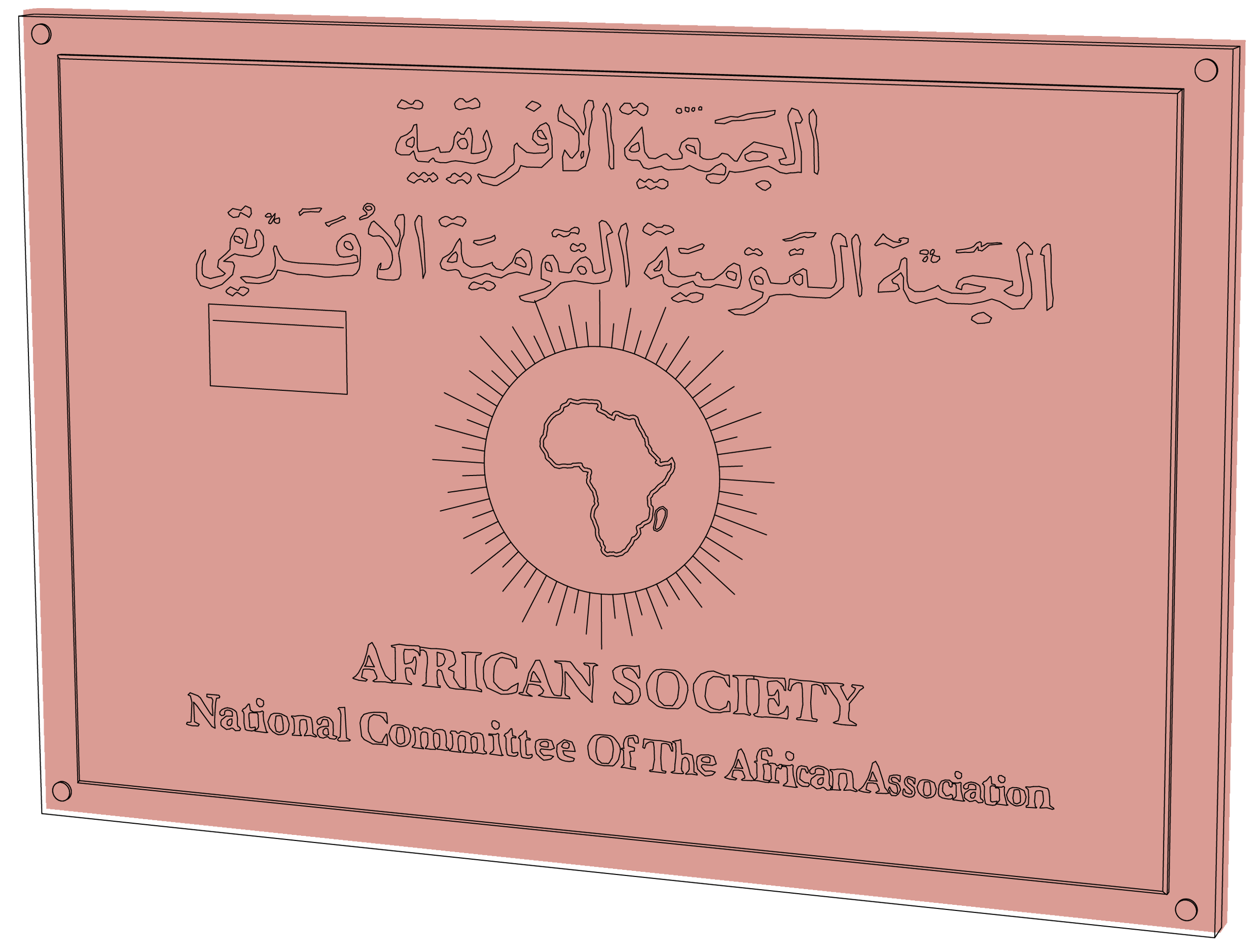
The African Association
Egypt’s Role in the African Struggle: Politics, Culture, and Solidarity in Cairo, 1950s–1970s
Since the mid-20th century, Egypt found itself an essential part of Africa’s broad movement for liberation from colonialism and the building of a future based on independence and dignity. Its geographic location and historical and cultural ties with the peoples of the continent gave it room to influence and participate in shaping this collective project. With its own national liberation, Egypt began to think about how to develop its African policies in ways that would support independence movements and strengthen economic, political, and cultural ties among the continent’s nations.
This was not driven by a search for domination or influence, but by a growing conviction that Egypt’s future was bound to Africa’s, and that cooperation among African states could pave the way toward a united African bloc capable of confronting global challenges. Calls emerged for direct contact with national movements, the expansion of economic exchange, the building of cultural and educational bridges, and active work in international forums to defend the right of African peoples to freedom and self-determination.
Politically, Egypt believed that the success of its African policies required practical tools to bring it closer to rising nations and peoples. This meant setting up consular services immediately after a country gained independence, and training Egyptian diplomats to study the continent’s history, languages, and conditions. Media also became crucial—through newspapers, cinema, and radio—as a way to communicate positions and spread awareness. At the same time, Egypt worked to establish direct ties with African leaders through scientific and political delegations, reciprocal visits, and even the proposal of an annual conference in Cairo to discuss the continent’s issues. The creation of the African Studies Institute in Cairo provided a hub of research and knowledge about African states. Internationally, Egypt used its presence at the United Nations and in the Afro-Asian bloc to advocate for Africa’s liberation struggles.
Economically, Egypt focused on expanding trade and strengthening ties with African markets. Plans were made to send specialized delegations to study the needs of African peoples, to set up permanent exhibitions showcasing Egyptian products, and to provide technical assistance and establish joint companies. This was aimed at making Egypt an active partner in Africa’s economic development, while also encouraging the movement of Egyptian professionals and entrepreneurs across the continent.
Beyond politics and economics, Egypt paid close attention to culture and education as long-term tools for building bonds. African students were welcomed into Egyptian universities, while Egypt sent teachers, doctors, and specialists to African countries. Cairo also proposed the creation of a radio station broadcasting to Africa, alongside efforts to promote tourism and sports as unconventional means of strengthening ties. These initiatives aimed to connect peoples through education and cultural exchange, deepening the sense of African solidarity and laying the groundwork for cooperation beyond formal state relations.
During those years, Cairo experienced one of its most vibrant African moments with the founding of the Organization of African Unity (OAU) and its hosting of the first summit in May 1964. The summit was not a mere protocol gathering; it embodied the spirit of resistance to colonialism. The Liberation Committee for Colonies was formed in Dar es Salaam, close to the frontlines of colonialism and settler rule, and African states committed to providing weapons and training for liberation struggles. Egypt found itself in a middle position—between Ghana and Tanzania’s revolutionary leadership on one hand, and Senegal and Ivory Coast representing the more conservative Francophone bloc on the other. This balance turned Cairo into the beating heart of the African movement, at the crossroads of regional and global rivalries.
Delegations of liberation movements from the Portuguese colonies flocked to Cairo, and meeting Nasser was a moment of pride and inspiration for these revolutionary leaders. Mohamed Fayek and his team at the presidency oversaw the African liberation portfolio, with clear instructions: facilitate meetings and support, but leave final assessments to the Liberation Committee. Over time, more than twenty offices of African movements opened in Cairo, often with multiple organizations from the same country—from South Africa and Angola to Rhodesia, Namibia, and Mozambique. This diversity was a strength, though it also created administrative challenges in coordinating different demands.
Cairo embraced this middle ground—not only as Africa’s liberation capital, but also as a balanced center in the Cold War. It supported all sides, offering scholarships, targeted radio programming, and opportunities for military training. At the heart of this scene stood the African Association in Zamalek, one of the key spaces that brought this dynamic to life. It became a home for liberation delegations, a place where Africa could express its revolutionary voice. Thus, Cairo became the meeting point for the continent’s major liberation forces—from the African National Congress (ANC), to the Popular Movement for the Liberation of Angola (MPLA), FRELIMO in Mozambique, SWAPO in Namibia, ZAPU in Zimbabwe, and even the PAIGC in Guinea-Bissau and Cape Verde. Between the offices of Zamalek and the African Association, Africa spoke in a unified, revolutionary voice.
In researching the African Association in Cairo, I found that the archival traces were scattered yet deeply connected across different collections—personal papers, institutional reports, and press material that did not always identify themselves as African archives. This fragmentation says a lot about African archives more broadly: they often exist on the margins of colonial and postcolonial record systems, requiring researchers to piece together networks and voices that were never meant to coexist. In that sense, the archive becomes less a fixed place and more an act of reconstruction, of bringing together what history has dispersed.
This was not driven by a search for domination or influence, but by a growing conviction that Egypt’s future was bound to Africa’s, and that cooperation among African states could pave the way toward a united African bloc capable of confronting global challenges. Calls emerged for direct contact with national movements, the expansion of economic exchange, the building of cultural and educational bridges, and active work in international forums to defend the right of African peoples to freedom and self-determination.
Politically, Egypt believed that the success of its African policies required practical tools to bring it closer to rising nations and peoples. This meant setting up consular services immediately after a country gained independence, and training Egyptian diplomats to study the continent’s history, languages, and conditions. Media also became crucial—through newspapers, cinema, and radio—as a way to communicate positions and spread awareness. At the same time, Egypt worked to establish direct ties with African leaders through scientific and political delegations, reciprocal visits, and even the proposal of an annual conference in Cairo to discuss the continent’s issues. The creation of the African Studies Institute in Cairo provided a hub of research and knowledge about African states. Internationally, Egypt used its presence at the United Nations and in the Afro-Asian bloc to advocate for Africa’s liberation struggles.
Economically, Egypt focused on expanding trade and strengthening ties with African markets. Plans were made to send specialized delegations to study the needs of African peoples, to set up permanent exhibitions showcasing Egyptian products, and to provide technical assistance and establish joint companies. This was aimed at making Egypt an active partner in Africa’s economic development, while also encouraging the movement of Egyptian professionals and entrepreneurs across the continent.
Beyond politics and economics, Egypt paid close attention to culture and education as long-term tools for building bonds. African students were welcomed into Egyptian universities, while Egypt sent teachers, doctors, and specialists to African countries. Cairo also proposed the creation of a radio station broadcasting to Africa, alongside efforts to promote tourism and sports as unconventional means of strengthening ties. These initiatives aimed to connect peoples through education and cultural exchange, deepening the sense of African solidarity and laying the groundwork for cooperation beyond formal state relations.
During those years, Cairo experienced one of its most vibrant African moments with the founding of the Organization of African Unity (OAU) and its hosting of the first summit in May 1964. The summit was not a mere protocol gathering; it embodied the spirit of resistance to colonialism. The Liberation Committee for Colonies was formed in Dar es Salaam, close to the frontlines of colonialism and settler rule, and African states committed to providing weapons and training for liberation struggles. Egypt found itself in a middle position—between Ghana and Tanzania’s revolutionary leadership on one hand, and Senegal and Ivory Coast representing the more conservative Francophone bloc on the other. This balance turned Cairo into the beating heart of the African movement, at the crossroads of regional and global rivalries.
Delegations of liberation movements from the Portuguese colonies flocked to Cairo, and meeting Nasser was a moment of pride and inspiration for these revolutionary leaders. Mohamed Fayek and his team at the presidency oversaw the African liberation portfolio, with clear instructions: facilitate meetings and support, but leave final assessments to the Liberation Committee. Over time, more than twenty offices of African movements opened in Cairo, often with multiple organizations from the same country—from South Africa and Angola to Rhodesia, Namibia, and Mozambique. This diversity was a strength, though it also created administrative challenges in coordinating different demands.
Cairo embraced this middle ground—not only as Africa’s liberation capital, but also as a balanced center in the Cold War. It supported all sides, offering scholarships, targeted radio programming, and opportunities for military training. At the heart of this scene stood the African Association in Zamalek, one of the key spaces that brought this dynamic to life. It became a home for liberation delegations, a place where Africa could express its revolutionary voice. Thus, Cairo became the meeting point for the continent’s major liberation forces—from the African National Congress (ANC), to the Popular Movement for the Liberation of Angola (MPLA), FRELIMO in Mozambique, SWAPO in Namibia, ZAPU in Zimbabwe, and even the PAIGC in Guinea-Bissau and Cape Verde. Between the offices of Zamalek and the African Association, Africa spoke in a unified, revolutionary voice.
In researching the African Association in Cairo, I found that the archival traces were scattered yet deeply connected across different collections—personal papers, institutional reports, and press material that did not always identify themselves as African archives. This fragmentation says a lot about African archives more broadly: they often exist on the margins of colonial and postcolonial record systems, requiring researchers to piece together networks and voices that were never meant to coexist. In that sense, the archive becomes less a fixed place and more an act of reconstruction, of bringing together what history has dispersed.
The African Association: Institutionalizing African Activism
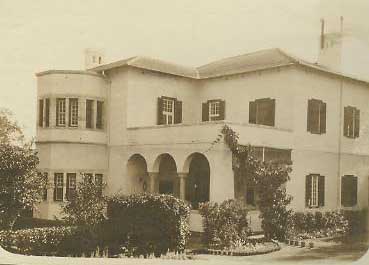
The African Association was founded in 1955 Headquartered in Villa No. 5 on Ahmed Heshmat Street in Cairo’s Zamalek district, its founding is attributed to Mohamed Abdelaziz Ishaq, a literature professor at Fuad I University (now Cairo University) known for his anti-colonial stance.1 Ishaq maintained a political salon in his home to discuss the continent’s pressing issues, and he donated the villa following a nomination by the office of President Gamal Abdel Nasser to host African liberation leaders. This act transformed his home into what was initially known as the "African League," a space that became a symbol of African solidarity in the heart of Cairo.
The Association was later used as offices for liberation movements, and “East Africa House” was established as a residence for students from the region. Among the earliest delegations received were members of the Union of the Peoples of Cameroon (UPC), whose activities had been banned at home. They found in Cairo an alternative space for political organizing. Within this context, Félix Moumié established a permanent Cameroonian office in 1957.2 Soon afterward, Ugandan pan-Africanist John Kaleekzi secretly reached Cairo via Sudan and settled in the Association as representative of the Uganda National Congress (UNC).
By the 1960s, the African Association had become a revolutionary hub, hosting nearly 24 nationalist parties from Eastern, Central, and Southern Africa. It also served as a safe political haven for key leaders such as Amílcar Cabral (founder of the liberation movement in Guinea-Bissau and Cape Verde), Samora Machel (founder of Mozambique’s FRELIMO and later its first president), and Agostinho Neto (founder of Angola’s MPLA and later its first president). Experienced political figures also took part, such as Joshua Nkomo (Zimbabwe) and Fosumzi Meek (South Africa).
Most members were young men in their twenties, many of them students living in Cairo who saw the Association as a practical school of political and liberation struggle. (3) In May 1958, for example, Kenyans James Ochwatta and Waira Ambitho arrived via the Nile Valley and established a “Kenya Office” within the Association. By 1960, they began presenting themselves as the External Office of the Kenya African National Union (KANU), later officially recognized by the party in 1961.
The Nasser government provided financial grants, stipends, and travel documents, allowing Association members to freely participate in international conferences and meetings. It also organized lectures and seminars, and distributed scholarships that attracted thousands of African students to Egyptian universities. The Association became a media platform for activists, publishing journals such as Uganda Renaissance and Zimbabwe Today, alongside its flagship Nahdat Ifriqiya, which played a central role in anti-colonial propaganda. Cairo Radio also supported liberation movements by broadcasting in local African languages such as Swahili, helping movements connect with their peoples.
The Nigerian journalist and traveler Olabisi Ajala famously described the Association as a “miniature United Nations”, highlighting its role in strengthening ties among African revolutionaries. In July 1959, for instance, the Association organized an Afro-Asian Day of Solidarity with Uganda. In 1961, it led a protest in Cairo’s Tahrir Square following the assassination of Patrice Lumumba, attended by delegates from across Africa.
The Association’s success did not go unnoticed by colonial powers. British archives reveal anxieties over its influence and the spread of pan-Africanist ideas among students. Although officially registered as a non-governmental organization, its activities remained aligned with Egypt’s foreign policy, as the state sought to balance support for liberation movements with the need to safeguard its international relations.
By the mid-1970s, with shifts in Egypt’s political and economic priorities, the Association’s revolutionary role diminished, and it gradually transformed into more of a student cultural organization than a liberation hub. Nevertheless, its legacy endures as testimony to Cairo’s role as a regional and international center for African liberation struggles, and as a bridge linking Africa, Asia, and the Third World in the era of decolonization.
The Cultural and Media Dimension
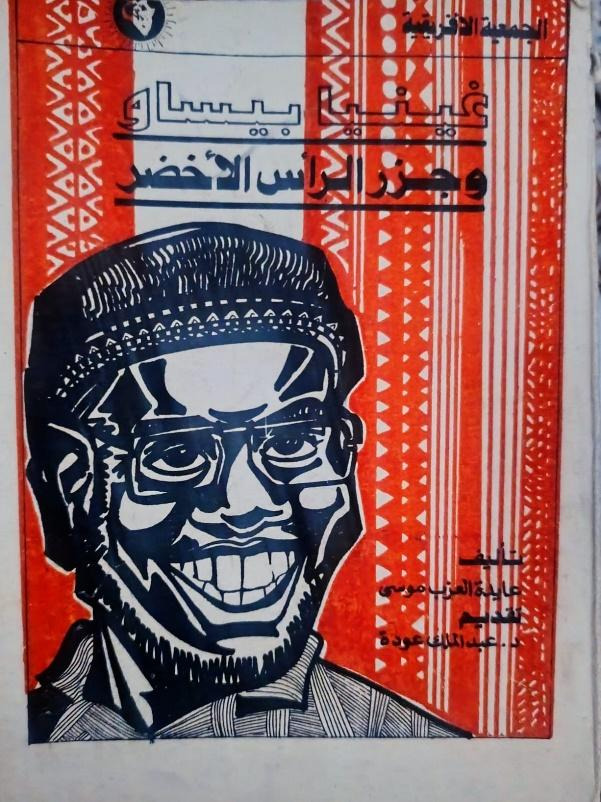
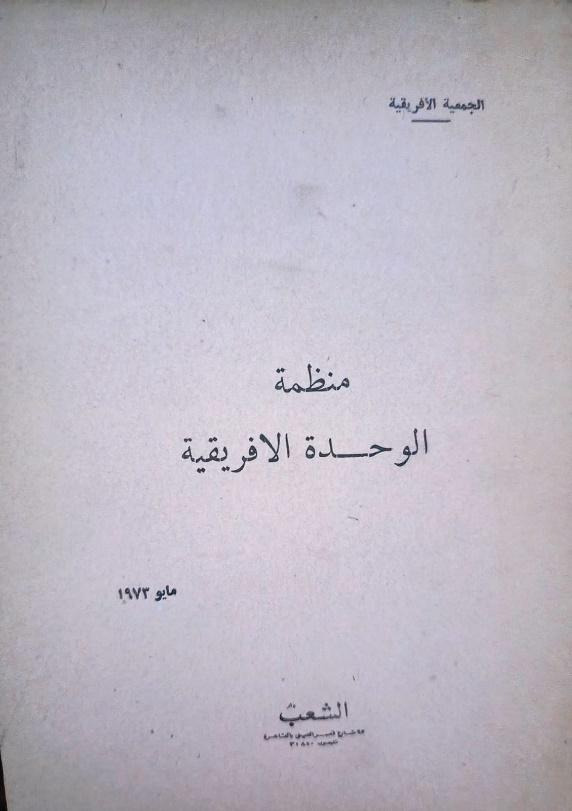
The Association was not only a political framework; it also played a prominent cultural and media role in Egypt from the 1950s onward. Following the publication of Gamal Abdel Nasser’s “Philosophy of the Revolution” in 1955, which identified the African circle alongside the Arab one, the African League—later renamed the African Association—moved quickly to embody this vision by launching its monthly journal Nahdat Ifriqiya (Africa’s Renaissance), edited by Abdel Aziz Ishaq and managed by the poet Abduh Badawi.
The journal marked a major step in shifting African issues from a purely political realm to a cultural and media space. It opened its pages to young writers and researchers, addressed topics such as African journalism, sculpture, and music, and introduced important translations on national movements, such as the Mau Mau uprising in Kenya.3 This allowed Egyptian intellectuals to engage directly with African developments and enriched the cultural field with new themes previously absent from Egypt’s public discourse.
The journal’s value was enhanced by contributions from leading African newspapers, including African West Pilot (Nigeria), East African Standard (Nairobi), Argus (South Africa), and Rhodesia Herald (Salisbury, now Harare). These publications offered a direct window into the realities of African colonies, allowing the journal to convey a more accurate and diverse picture of the continent, free from colonial stereotypes.4
In this way, Nahdat Ifriqiya embodied the essence of the Association’s mission: bringing together culture, media, and intellectual engagement, while linking Egyptian intellectuals with African national movements and cultural production. It was an early and effective step toward building a shared Egyptian–African discourse based on direct knowledge and active interaction with Africa’s struggles for liberation and nation-building.
The African Association and the Neoliberal Context: How the Memory of African Liberation Was Seized in Egypt
By the late 1970s, the African Association entered one of the most sensitive and painful chapters in its history. What had once been an independent cultural and political platform became a battleground with state apparatuses under President Anwar al-Sadat. The forced dismissal of its board of directors in January 1980 illustrated how the authorities dealt with civil society institutions, even when the incident might have seemed minor to outside observers.
Security forces infiltrated the Association’s secretariat without notifying its officials, submitting more than two hundred valid membership applications for the general assembly. Suddenly, the hall was filled with new members who hastily voted to remove the sitting board, despite its prominent figures such as Boutros Ghali, Mostafa Rateb, and Abdel-Malek Oudeh.5 At the same time, another faction representing renewal and opposition within the Association was sidelined. This included Helmy Sharawy, Ibrahim Saqr, Sami Mansour, and Awatif Abdel Rahman, while younger staff and researchers connected to the Association were also dismissed.
This episode reflected Sadat’s governing logic, epitomized in his famous declaration that democracy has fangs. The same tactics were used against the Bar Association and later the Engineers’ and Doctors’ Syndicates, culminating in the mass arrests of opposition leaders in September 1980. In the case of the African Association, its leadership was accused of hosting diplomats from the Eastern bloc, of organizing forums attended by opposition figures like Fathi Radwan, and of serving as a meeting ground for leftist youth, some of whom were recruited to work there.
Notably, individuals known for moderation or even close cooperation with the Association’s leadership sided with the ouster. Judge Mostafa Rateb, for instance, enthusiastically supported the move, while Dr. Abdel-Malek Oudeh later justified his position by pointing to the overwhelming coercive power of the state, insisting that resistance was impossible. Such responses underscored the vulnerability of Egypt’s intellectual and political currents when confronted with Sadat’s authority.
The purge of the African Association’s board was part of a wider political design. Sadat sought to restructure society by suppressing unions, associations, and civil institutions, while promoting state-sponsored forums and formal political parties. The goal was clear: to prevent the emergence of any genuine structures of popular or political mobilization. In this climate, the African Association was transformed from a space of independent research and discussion into a security-controlled arena shaped by regime dictates.
Still, Africa’s presence in Cairo did not vanish. Press conferences and meetings with liberation leaders continued, among them Joshua Nkomo of Southern Rhodesia, later Zimbabwe, who attended a major conference in Cairo in 1979 on the eve of his country’s independence. His visit symbolized the liberation wave sweeping southern Africa. Yet this occurred at the very moment when Sadat was supporting conspirators in Angola, the Congo, and Mozambique against their national movements6, a stark contradiction between official policy and the commitments of Egyptian intellectuals to Africa.
Sadat’s African policy thus marked a radical shift, from championing resistance movements to aligning with Western alliances under the banner of economic liberalization and the political turn toward Washington. Whereas Nasser’s Egypt had been a consistent supporter of anti-colonial struggles, Sadat’s Egypt imposed silence on central questions such as Southern Rhodesia. The same country that had denounced the white settlers’ unilateral declaration of independence in 1965 was, by the late 1970s, engaged in trade deals importing Rhodesian tobacco and even facilitating meetings with Rhodesian officials in the Gulf, far removed from any solidarity with movements like ZAPU or ZANU.
This retreat strained Egypt’s direct relations with African leaders. At a Cairo press conference organized by the African Association, Joshua Nkomo was asked bluntly whether Sadat had abandoned their cause. Forced to respond before BBC cameras, he diplomatically denied it, pointing to his presence in Cairo as symbolic proof of Egyptian support, though his answer barely concealed a sense of betrayal. A similar incident arose when Sam Nujoma, leader of SWAPO in Namibia, refused to accept an invitation to Cairo on the grounds that Mohamed Fayek, the emblem of Egypt’s African policy, was imprisoned. It was a clear signal that Cairo had lost credibility.
The same pattern extended to Angola, where Egypt leaned toward supporting UNITA, led by Jonas Savimbi, infamous for his collaboration with apartheid South Africa, over the MPLA of Agostinho Neto. Despite limited attempts by Association figures to persuade Savimbi to join the nationalist camp, Sadat’s Cairo embraced him as an ally against Soviet and Cuban influence. Over time, Savimbi became a direct instrument of the Western bloc, flying from South Africa to hunt down liberation fighters, while Sadat’s Egypt rationalized this alignment as part of the anti-communist struggle, just as it supported Islamist groups in Afghanistan.
Another telling example was Sadat’s alliance with Mobutu Sese Seko of Zaire. Long a symbol of Western dependency, Mobutu became a natural partner once Egypt abandoned its liberationist course. Cairo not only offered political support but also direct military assistance during the Shaba wars of 1977 and 1978, when Mobutu confronted nationalist uprisings in southern Congo.7 This marked a decisive break. Egypt had shifted from being a champion of liberation in the 1960s to a supporter of one of Africa’s most authoritarian rulers, in full alignment with Western strategy.
The consequences for Egypt’s African role were profound. Instead of serving as a hub for liberation movements, Cairo was reduced to a junior partner in Western strategy, backing Mobutu in Zaire, legitimizing UNITA in Angola, and rationalizing policies in Ethiopia and elsewhere under the guise of anti-communism. The gains of the October War on the African stage evaporated as Egypt drifted into near-total loyalty to the American and Israeli camp.
Ultimately, the removal of the African Association’s elected board was not an isolated event but part of a larger transformation. Sadat’s Egypt abandoned its historic liberationist role, dismantled independent civil society, and repositioned itself as a subordinate player in Western and Israeli strategies across Africa. The memory of African liberation in Cairo was not erased, but seized, reshaped, and subordinated to the logics of global power.
Footnotes
- Nasser, G. A. (1964). On Africa. Information Department.
- Sharawy, H. (2005). Afro Arab Times. Dar El Alam Thalith.
- Fayek, M. (1982). Abd El-Nasser wa-l-Thawra Al-Ifriqiyya [Abdel Nasser and the African Revolution]. Dar Al-Mustaqbal Al-‘Arabi.
- Nasser, G. A. (1963). The Philosophy of the Revolution. Mondiale Press.
- Shaarawy, Helmy. (2019). An Egyptian-African Memoir. Cairo: Al-Ain Publishing. ISBN 9789774905377.
- Hassan, Mahmoud. (1990). Egypt in Africa: From Nasser to Sadat. Cairo: Dar Al Maaref.
- Edelberg, Paul. (1979). Sadat's Strategy. New York: Harper & Row.
Kribsoo Diallo
Kribsoo Diallo is a Cairo-based Pan-Africanist researcher in political science related to African affairs. He has written for many African magazines and newspapers, and Diallo has contributed to translated editions of papers and articles in Arabic and English for several research centers within the African continent.
︎ ︎

Archive Stories is funded by the London School of Economics and Political Science.
Copyright © 2026 Archive Stories. All Rights Reserved